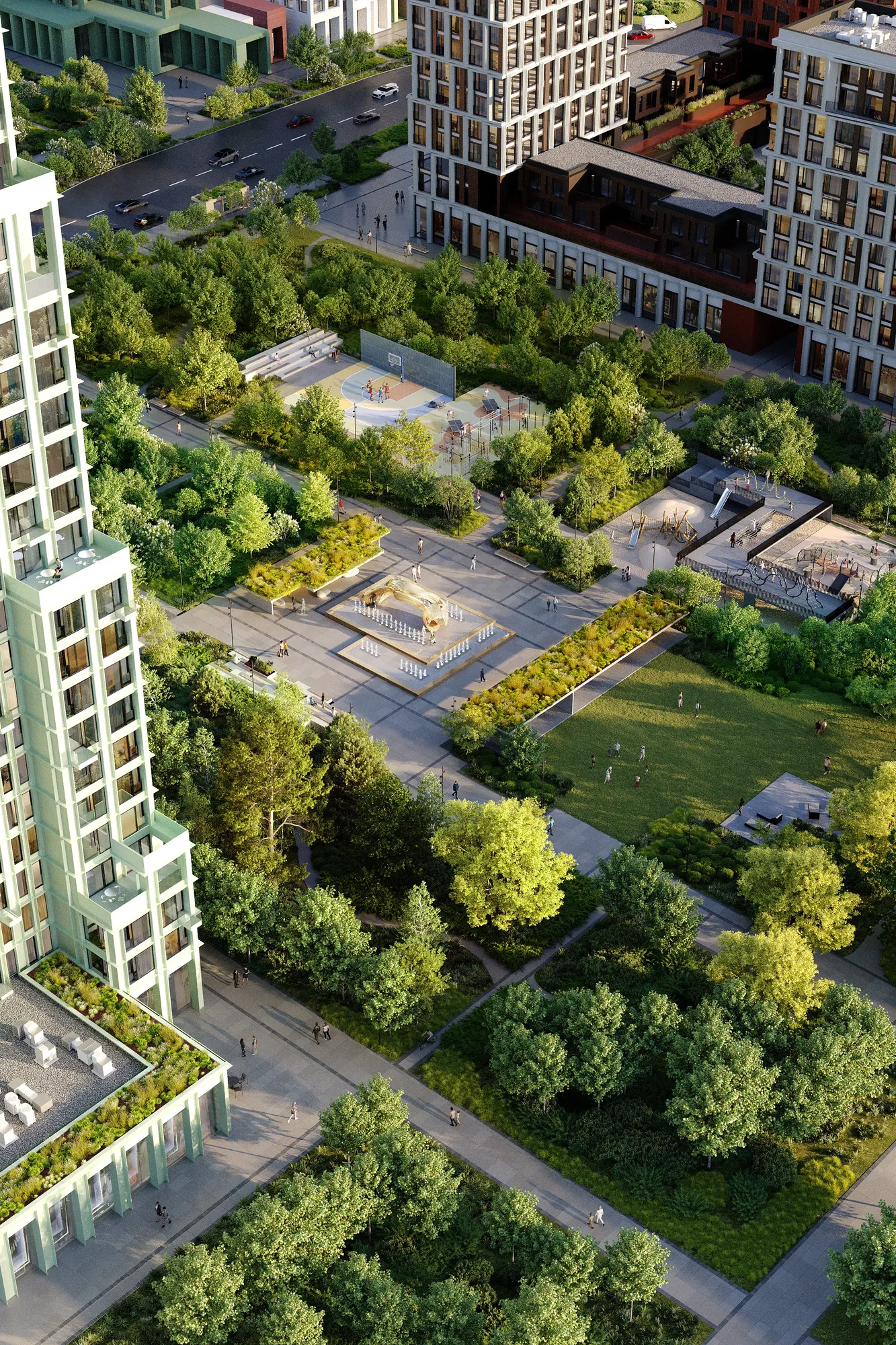
A new core of the esteemed Moscow district — an urban area spanning 73 hectares for 20,000 inhabitants — is evolving alongside a scenic river, at the site of the former machine-building plant. This large-scale project, launched by the Moscow Government and a development company, aims to set a new direction for how the capital's urban environment evolves.
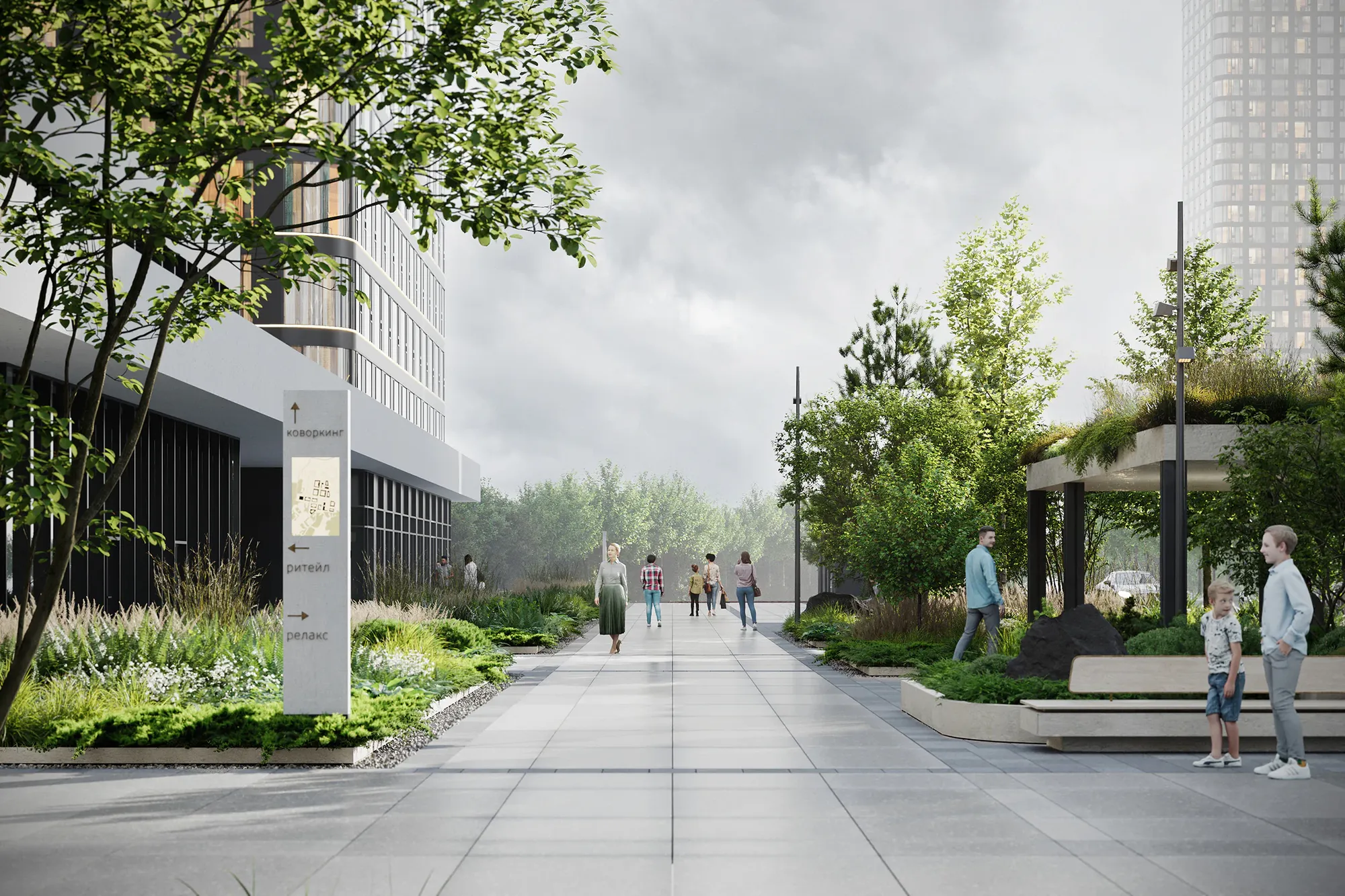
Moscow Mayor Sergei Sobyanin and Chief Architect Sergei Kuznetsov have set an ambitious objective: to create a pilot microdistrict with cutting-edge development standards, which will act as a prototype for the "My Street 2.0" program. The core principle is "a city for living," focused not on an abstract urban resident, but on a real person: a pedestrian, a cyclist, a public transport user, or a visitor coming out of the metro. It was important to first picture the improvements and understand how residents' comfort would shape the new setting — only then did the district's architecture begin. It was from a "human eye" perspective, not a bird's-eye view, that every decision in the landscape was assessed.
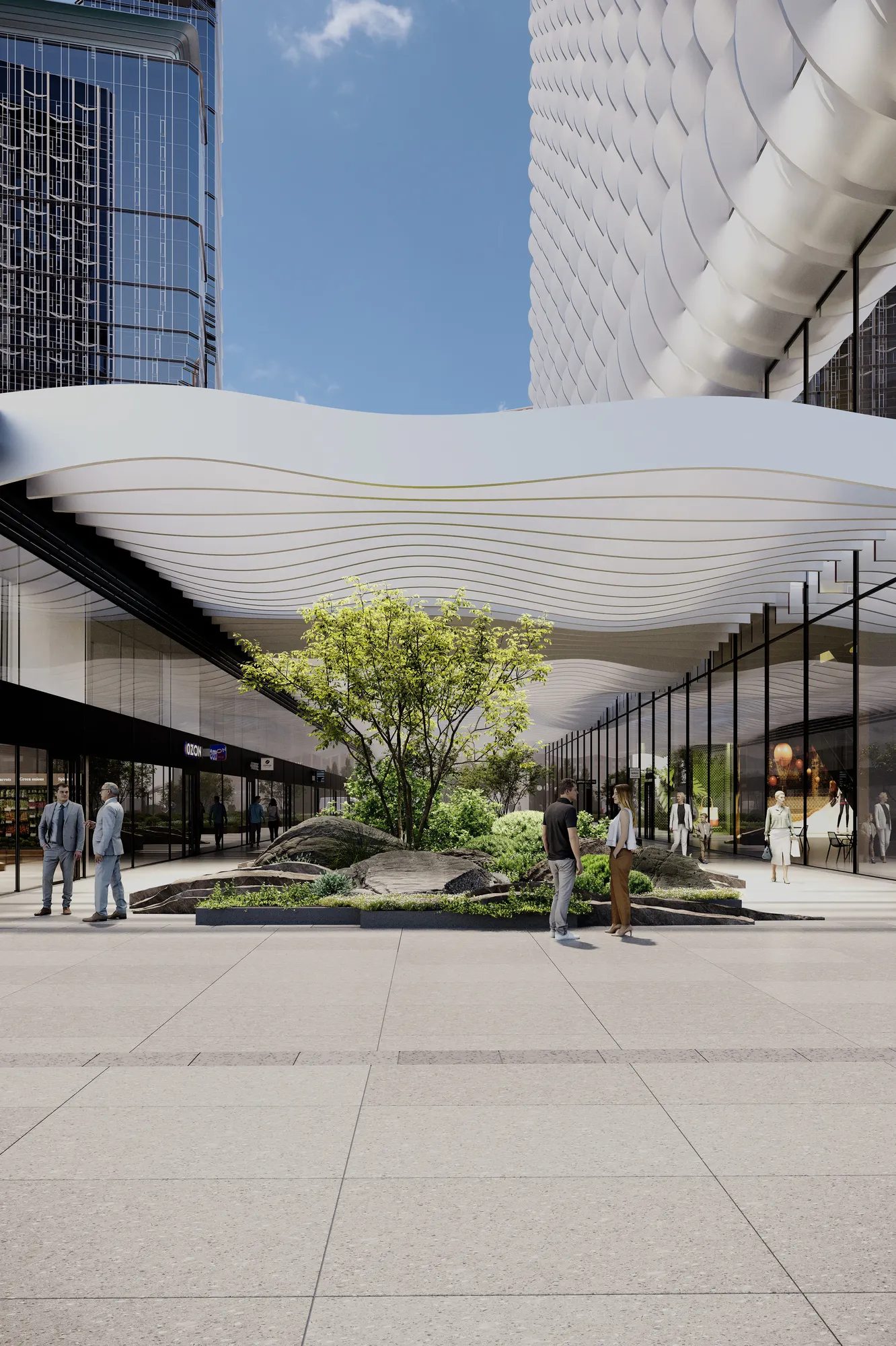
For the first time in large-scale urban planning, building architecture has taken a backseat to landscaping. Top architectural firms awaited the completion of the landscape concept to integrate their projects into the existing environment. This enabled us to build a unified design code from the very beginning, harmoniously linking residential complexes, offices, schools, the Krasny Oktyabr sports facility, embankments, boulevards, transit streets, and underground approaches.
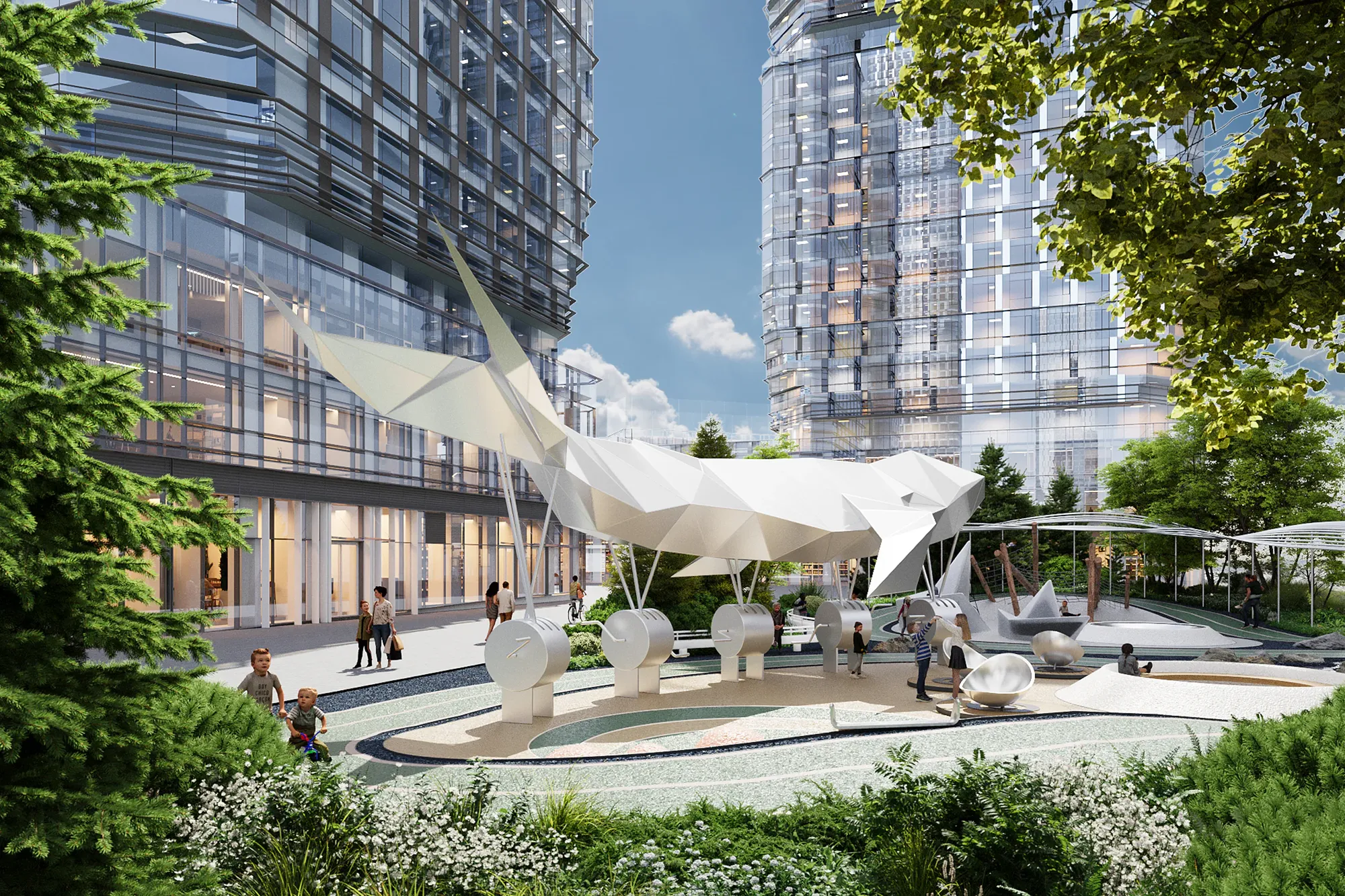
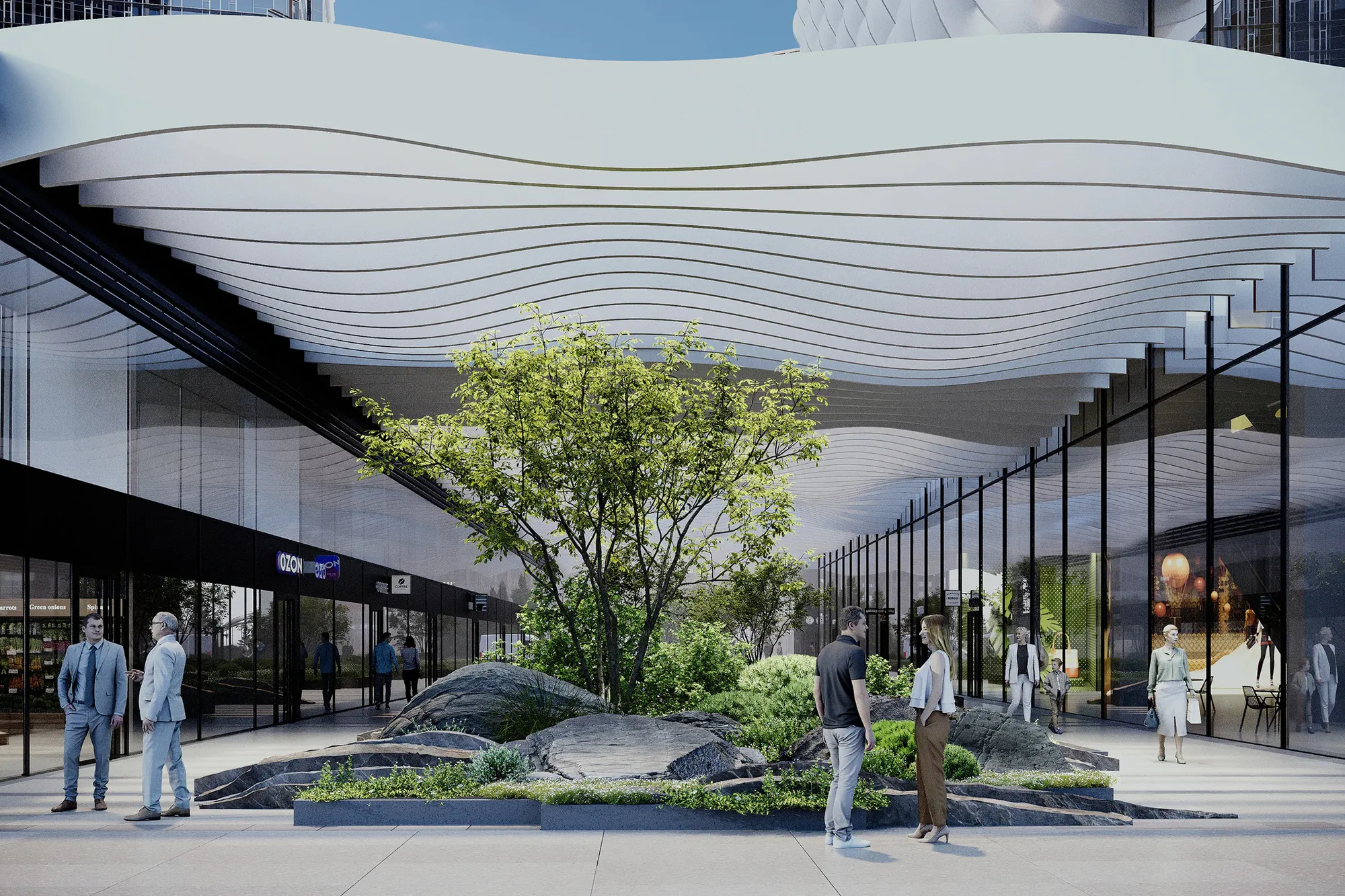
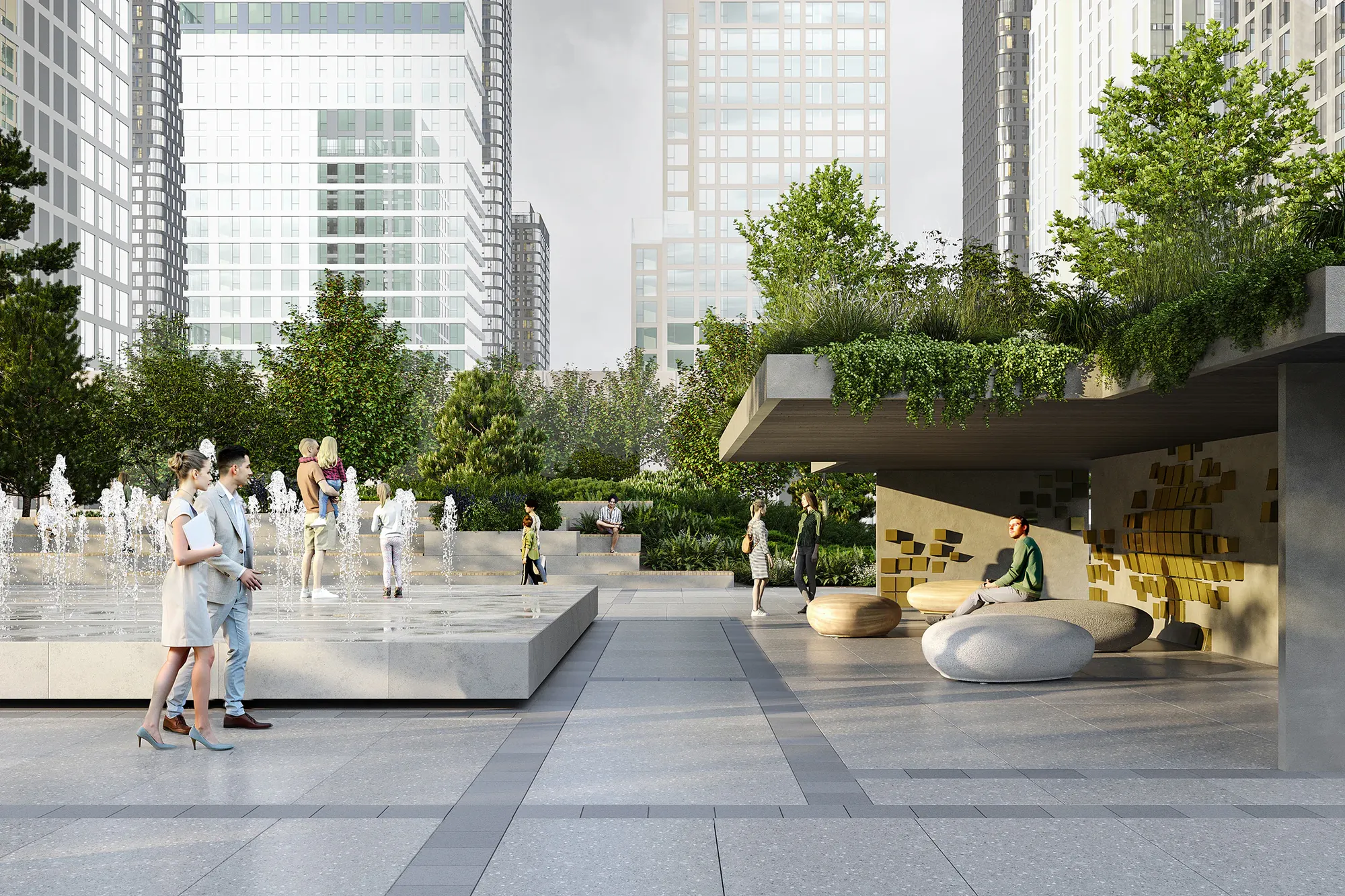
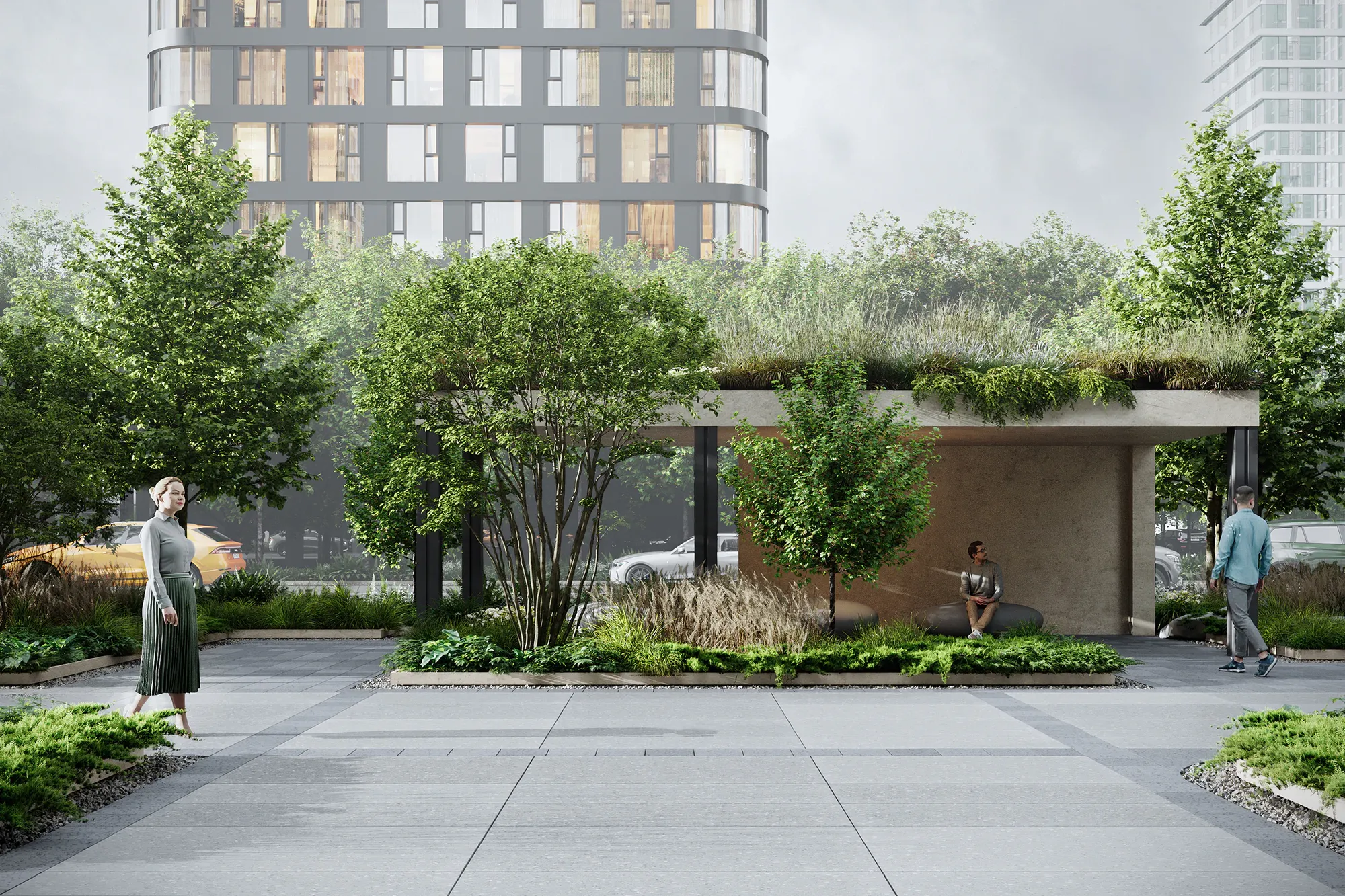
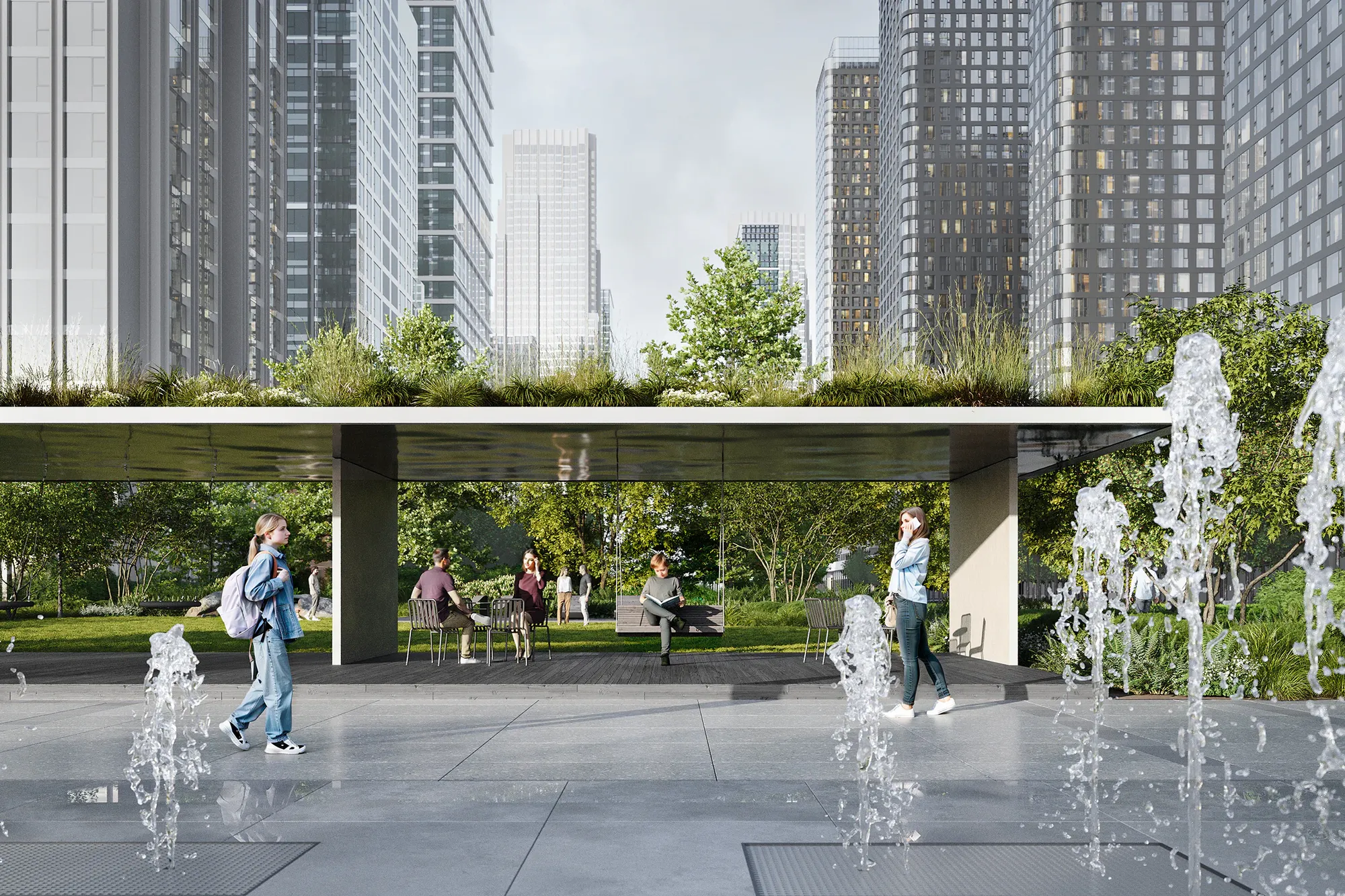
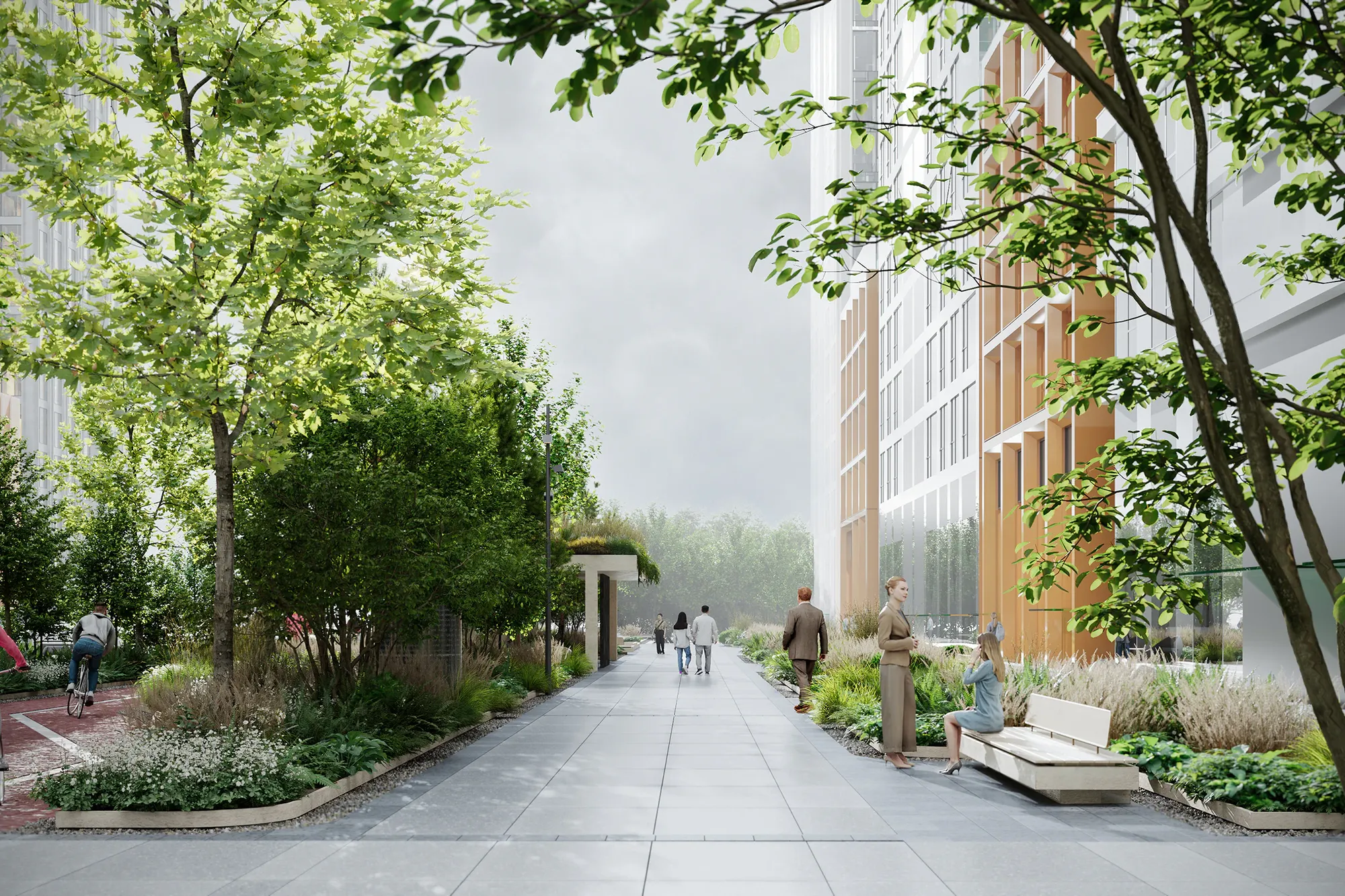
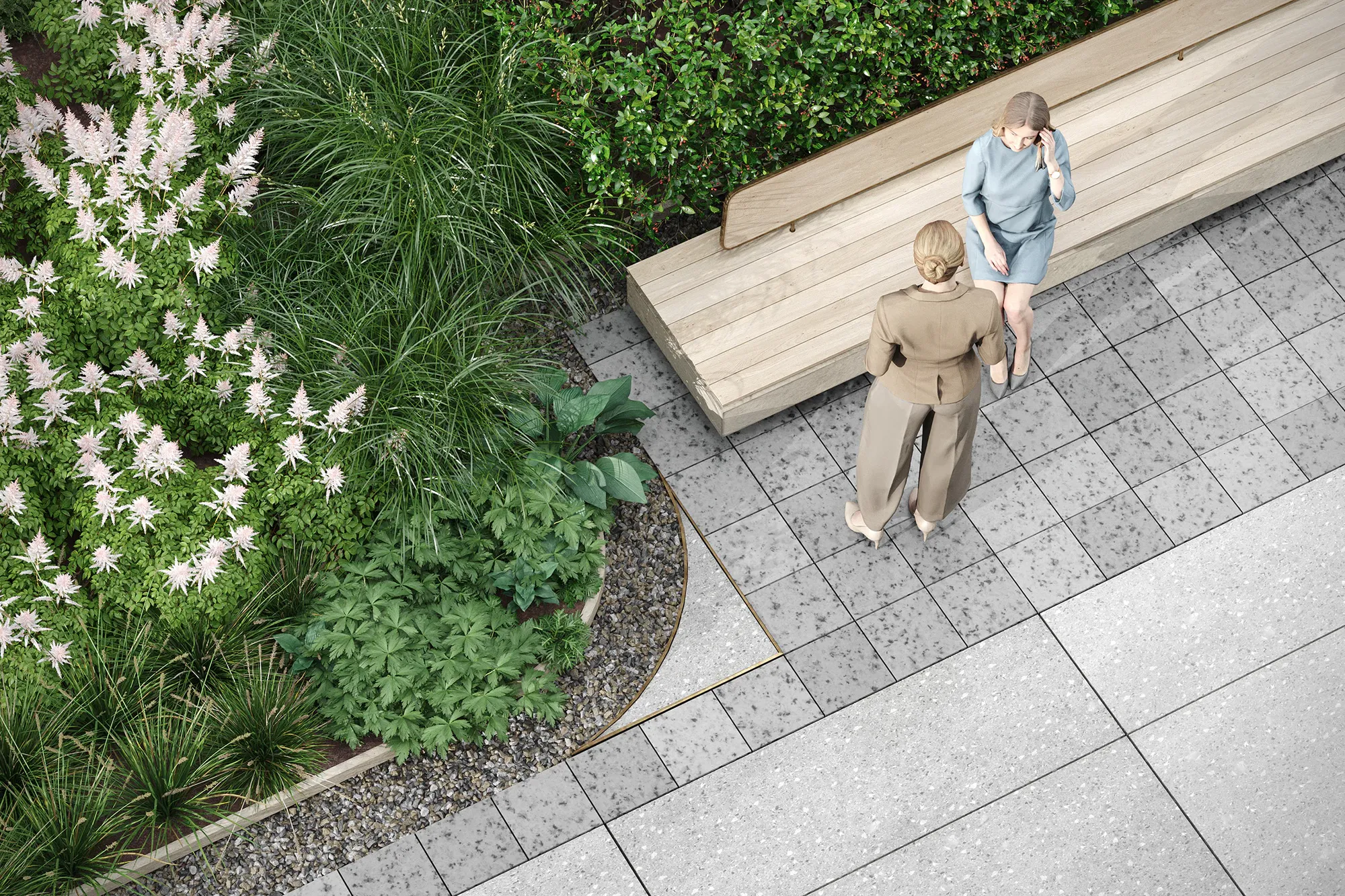
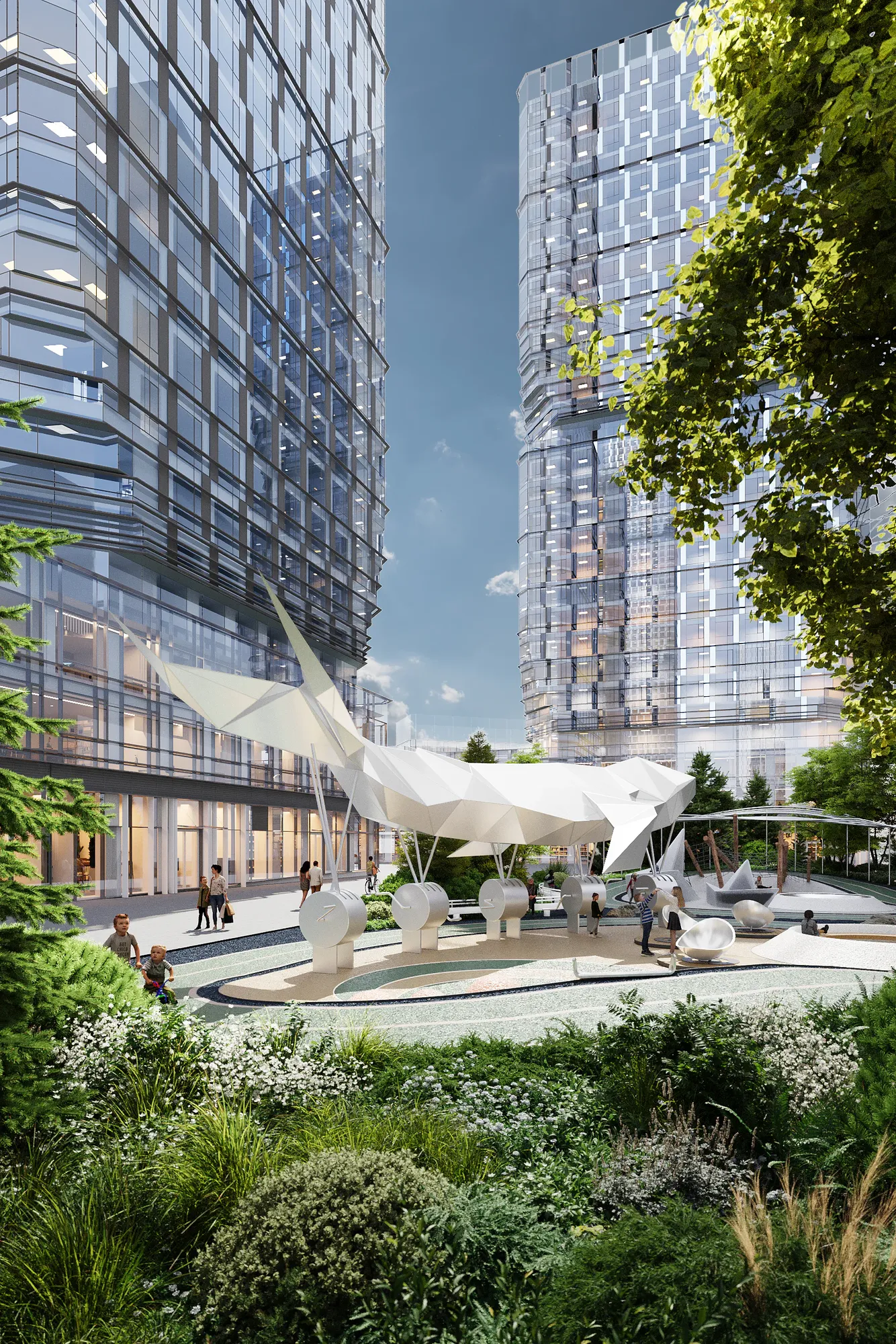
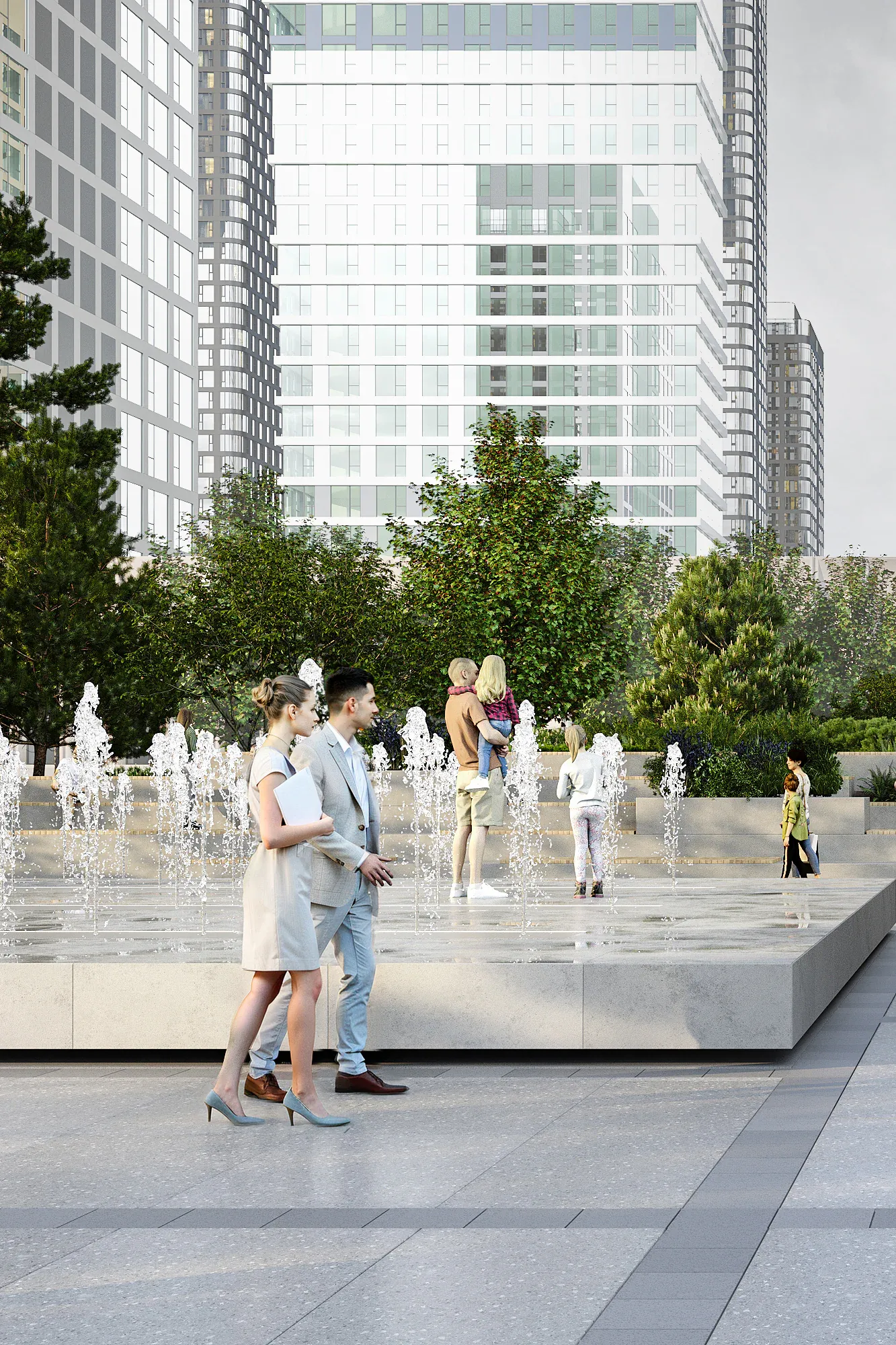
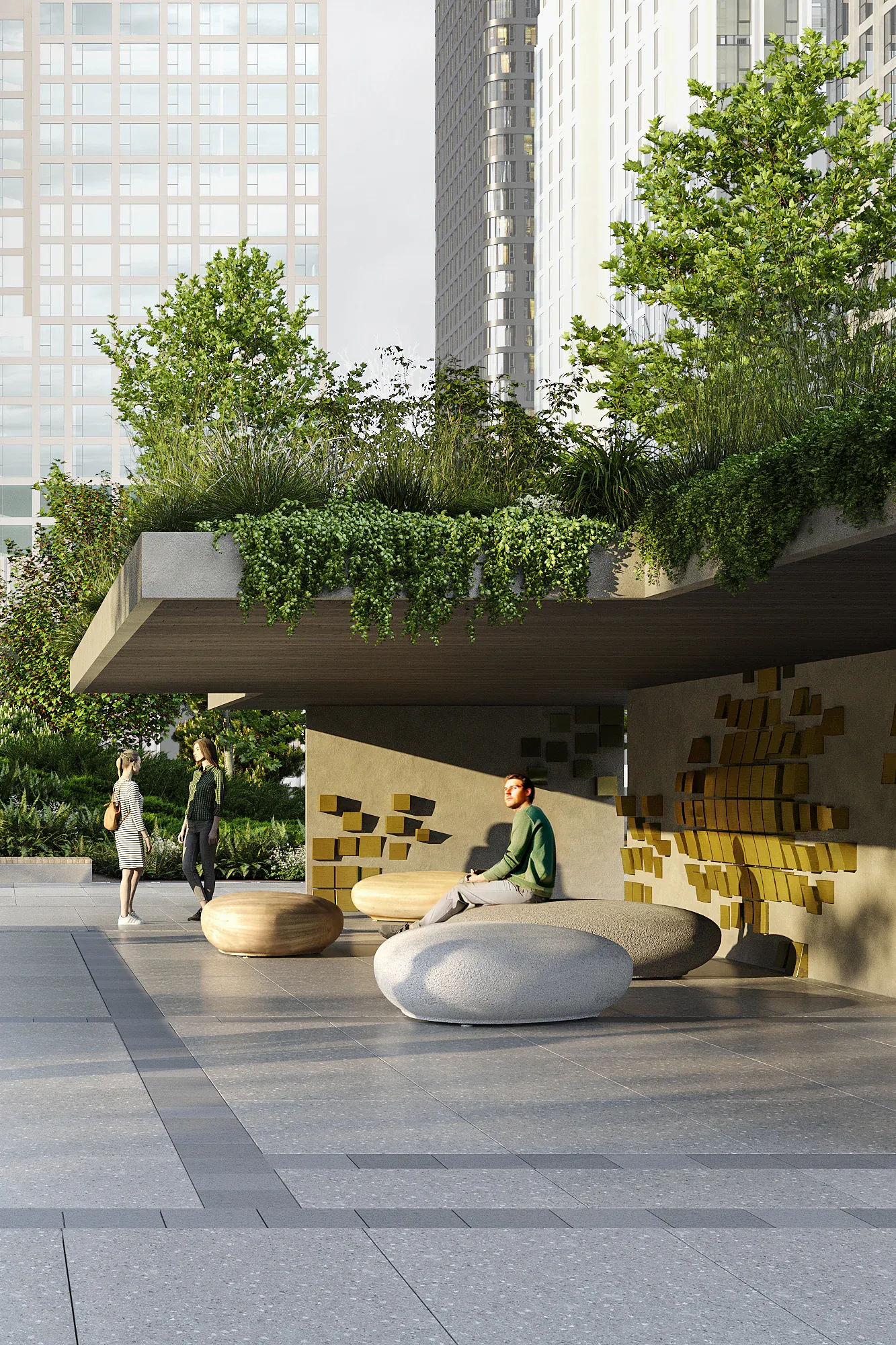
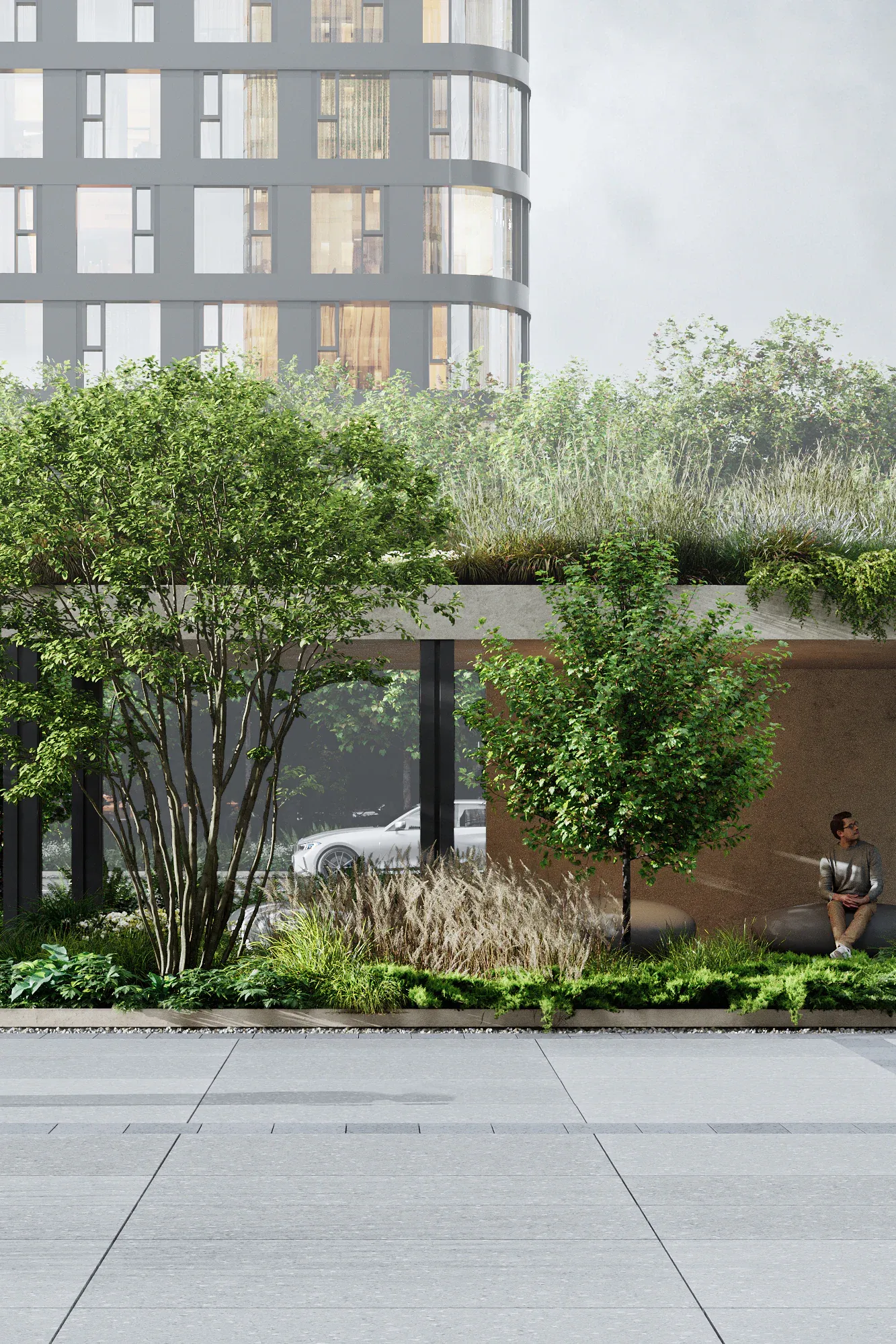
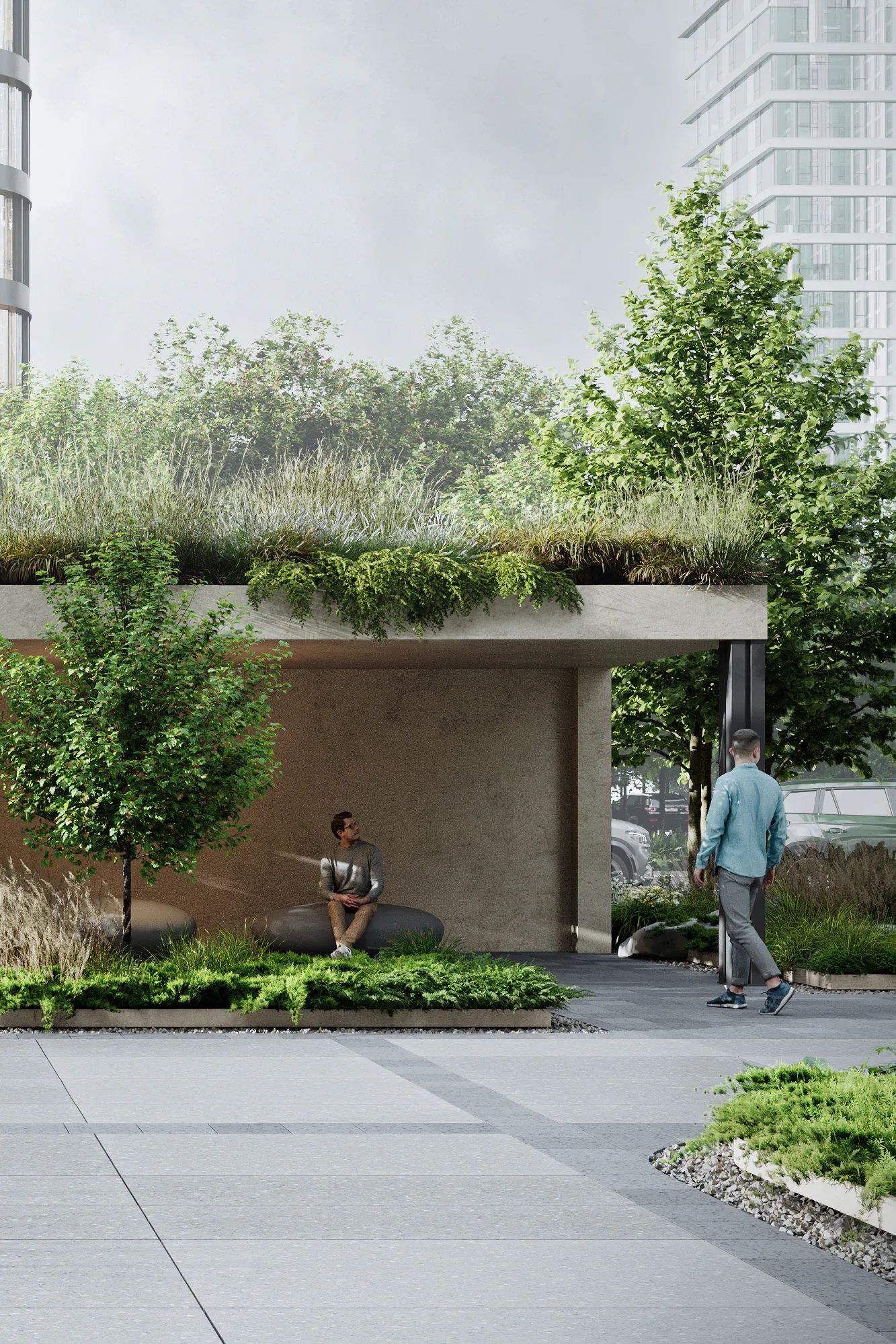
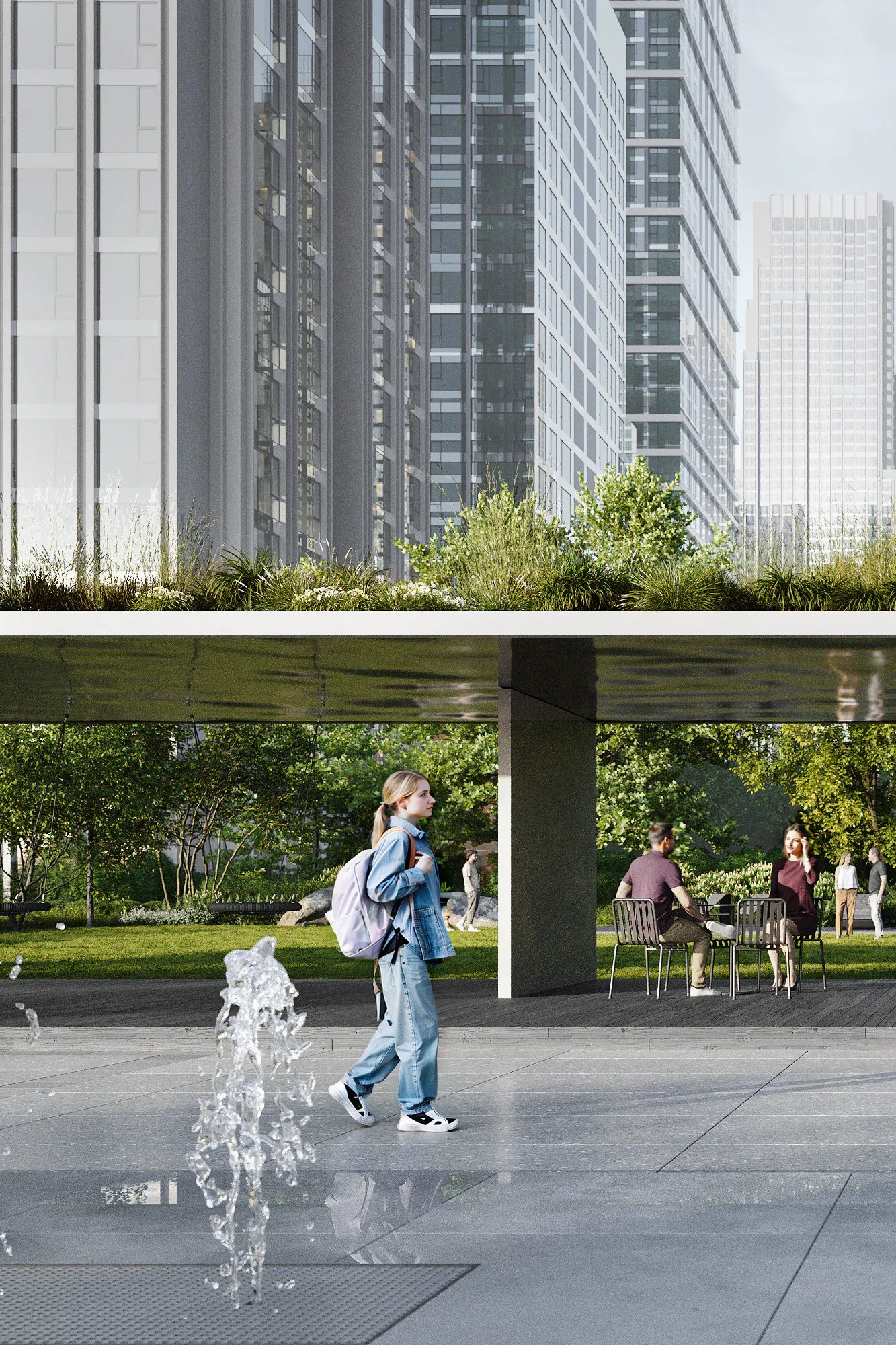
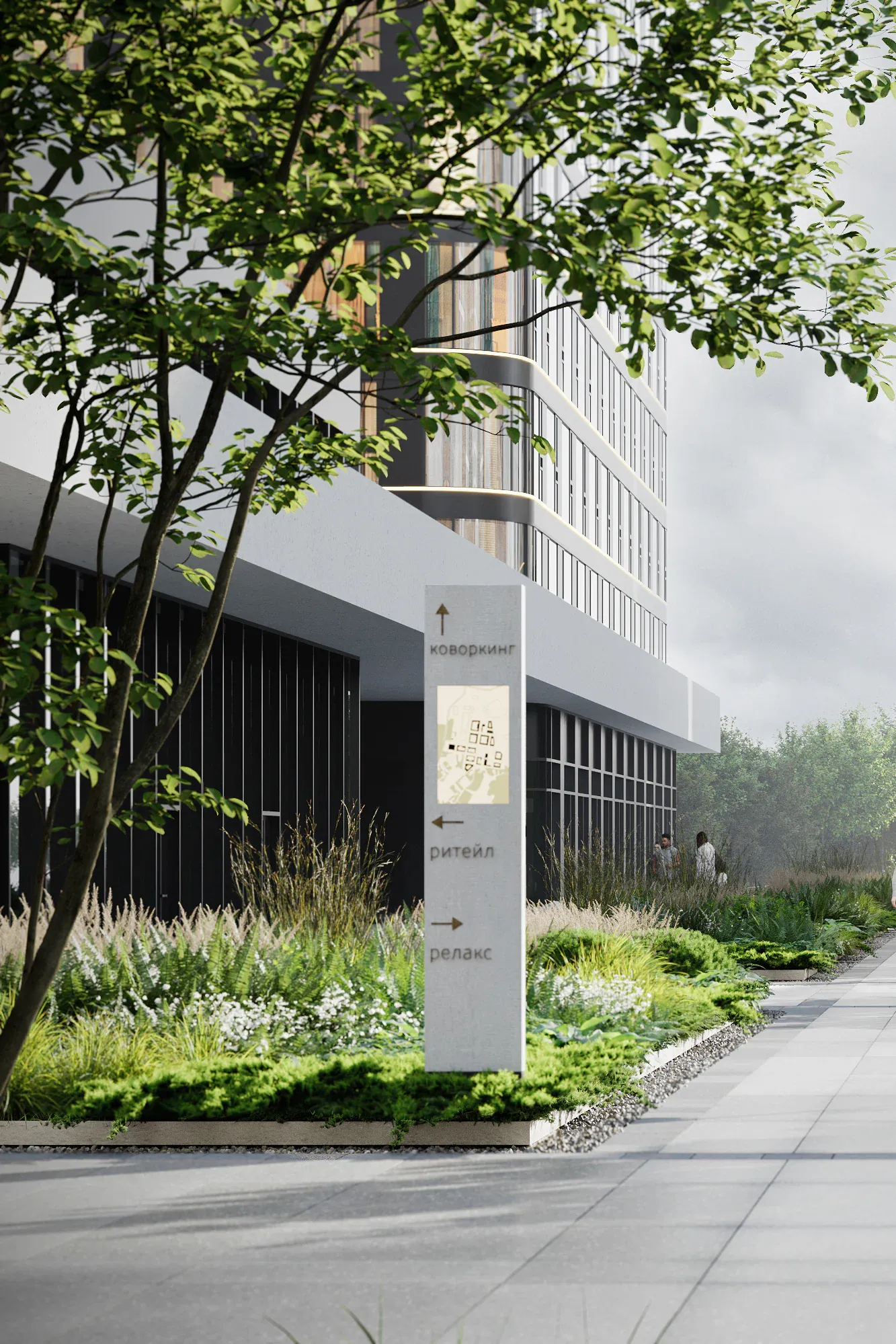
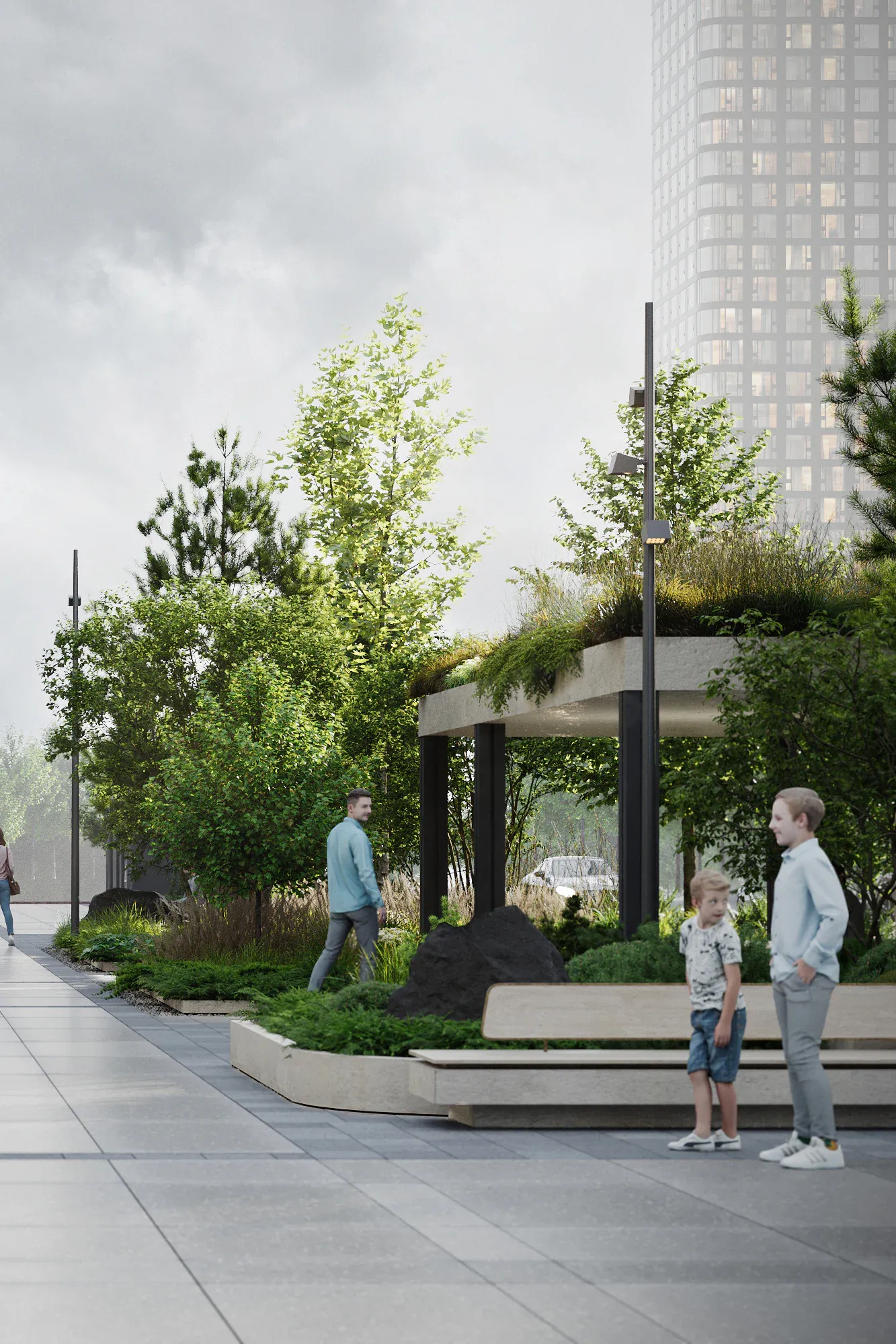
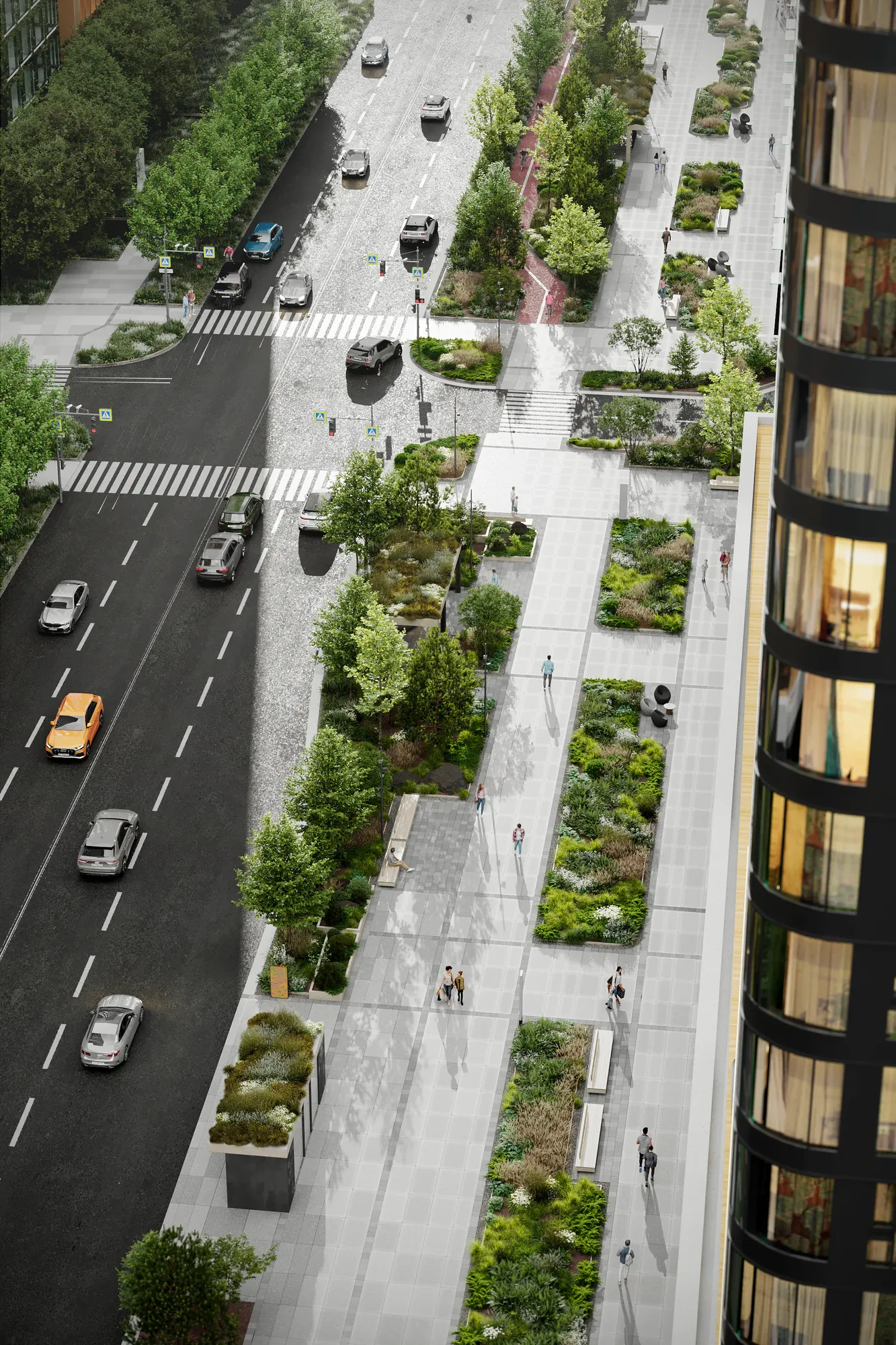
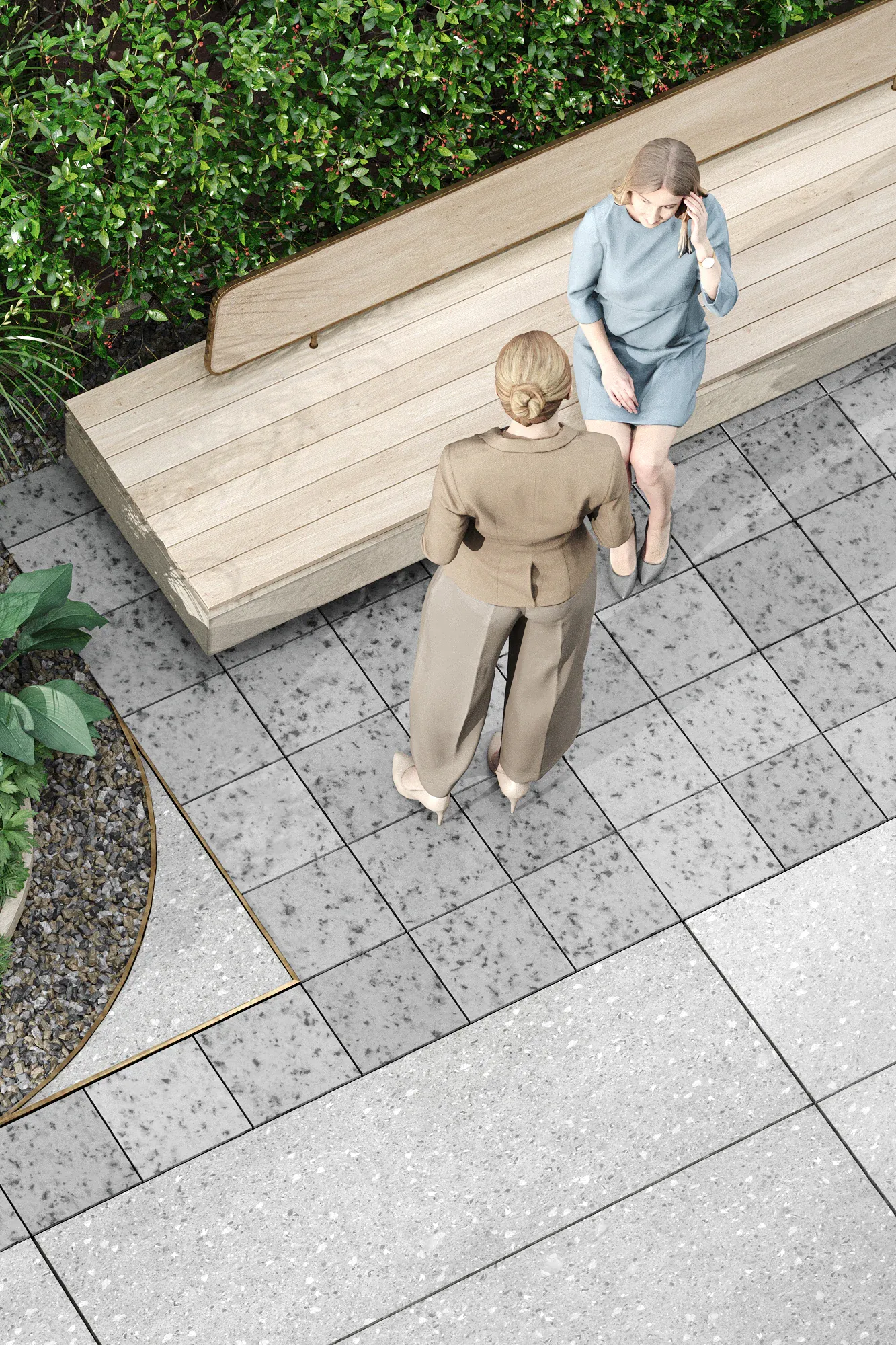
The central idea is a seamless, integral space, where there are no sharp boundaries between the park and the street. The usual asphalt and "cool" gray city palette have been swapped for a warm, inviting setting featuring large-format rounded beige tiles, and small architectural elements with brass and wood laminate accents. Bike paths, green-roofed canopies, art installations (objets d'art), and even a tree museum — everything adhere to the principles of functionality, logistical connectivity, and the unique style of Scandinavian gardens®, with their geometric forms, clean lines, and distinctive character.
We increased the landscaping coverage from 10% to 30%. This required complex coordination with city utility specialists to remove utility lines from the streets for trees. Most of them are raised and protected by metal sides.
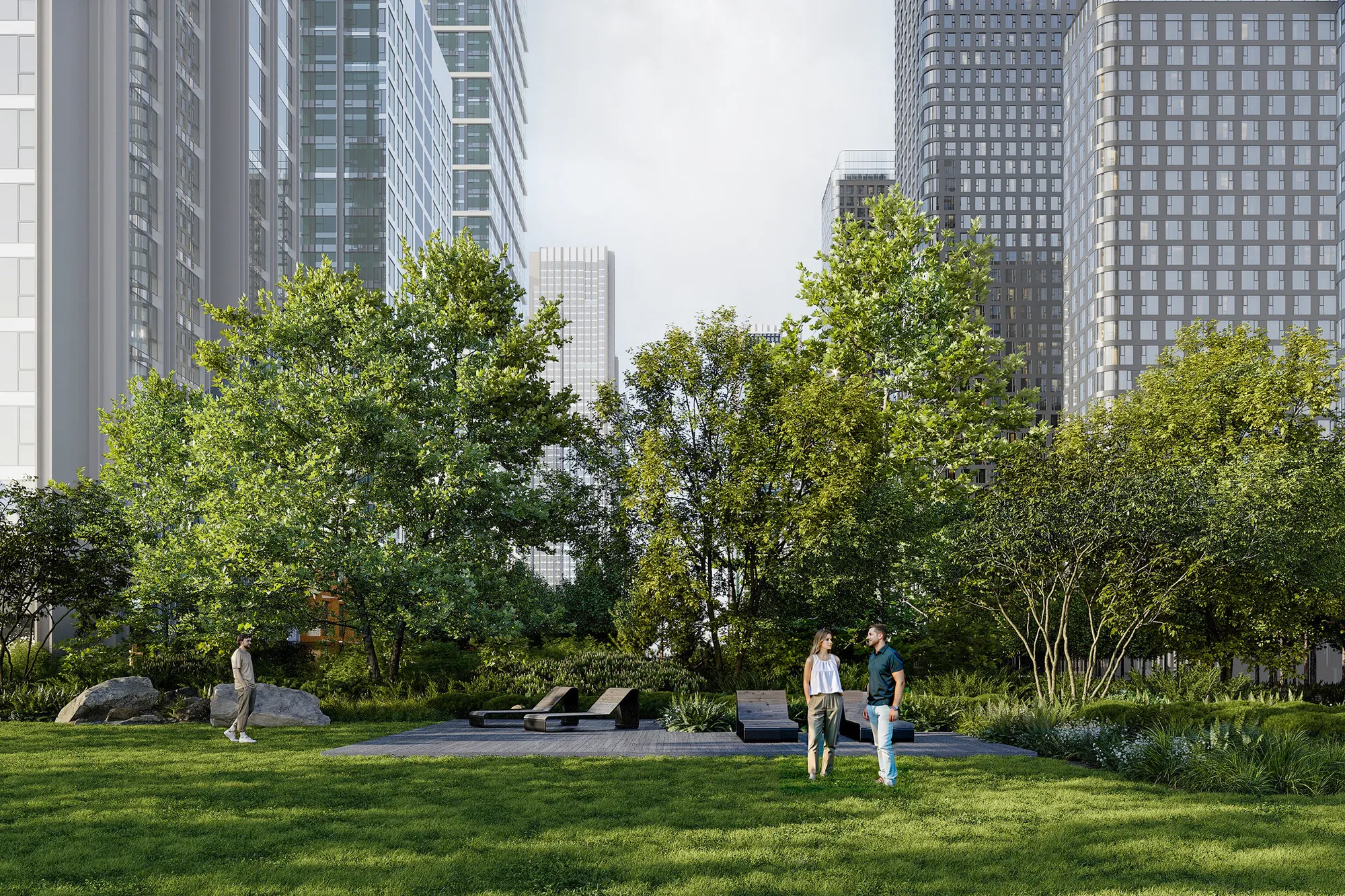
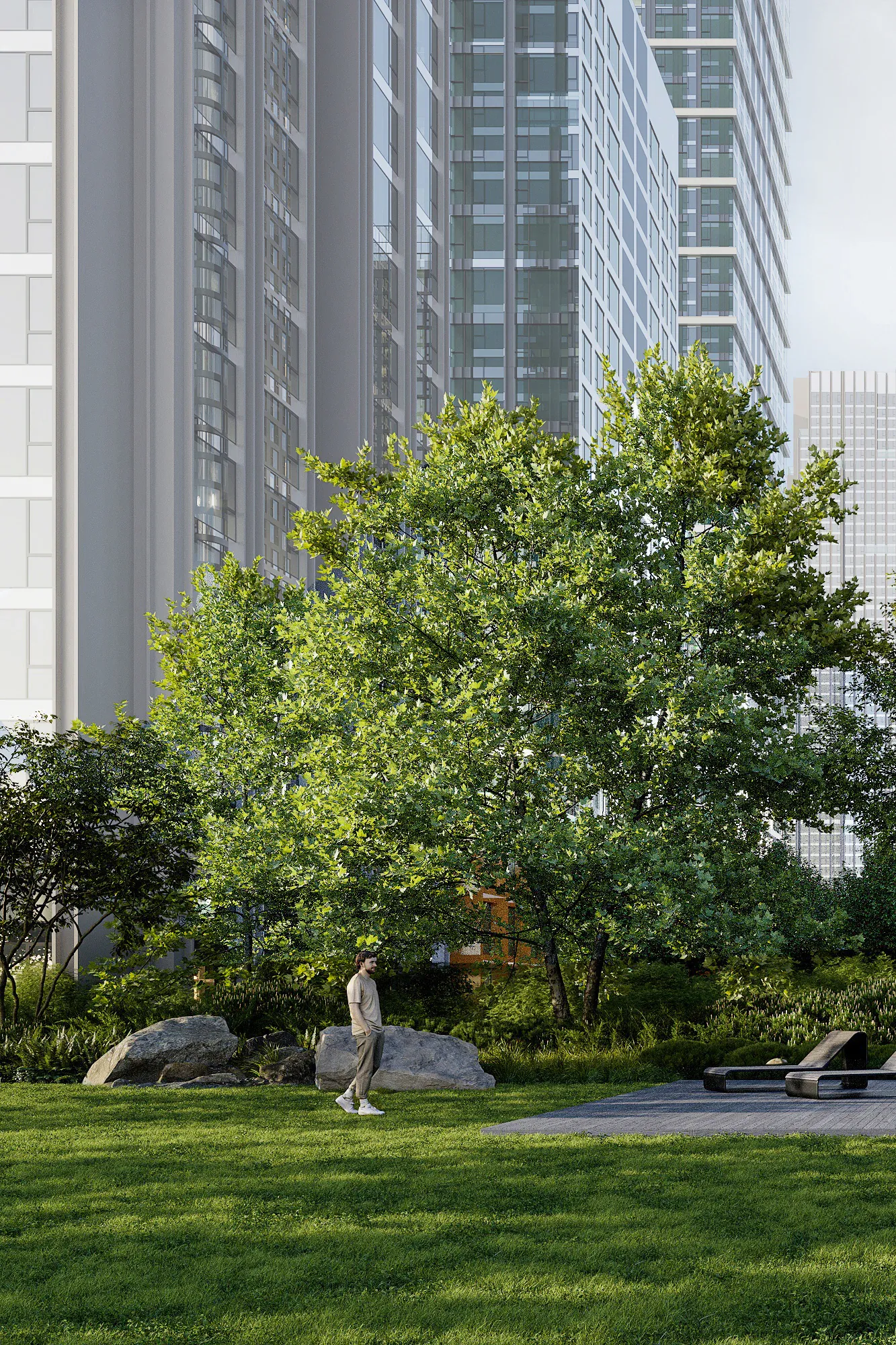
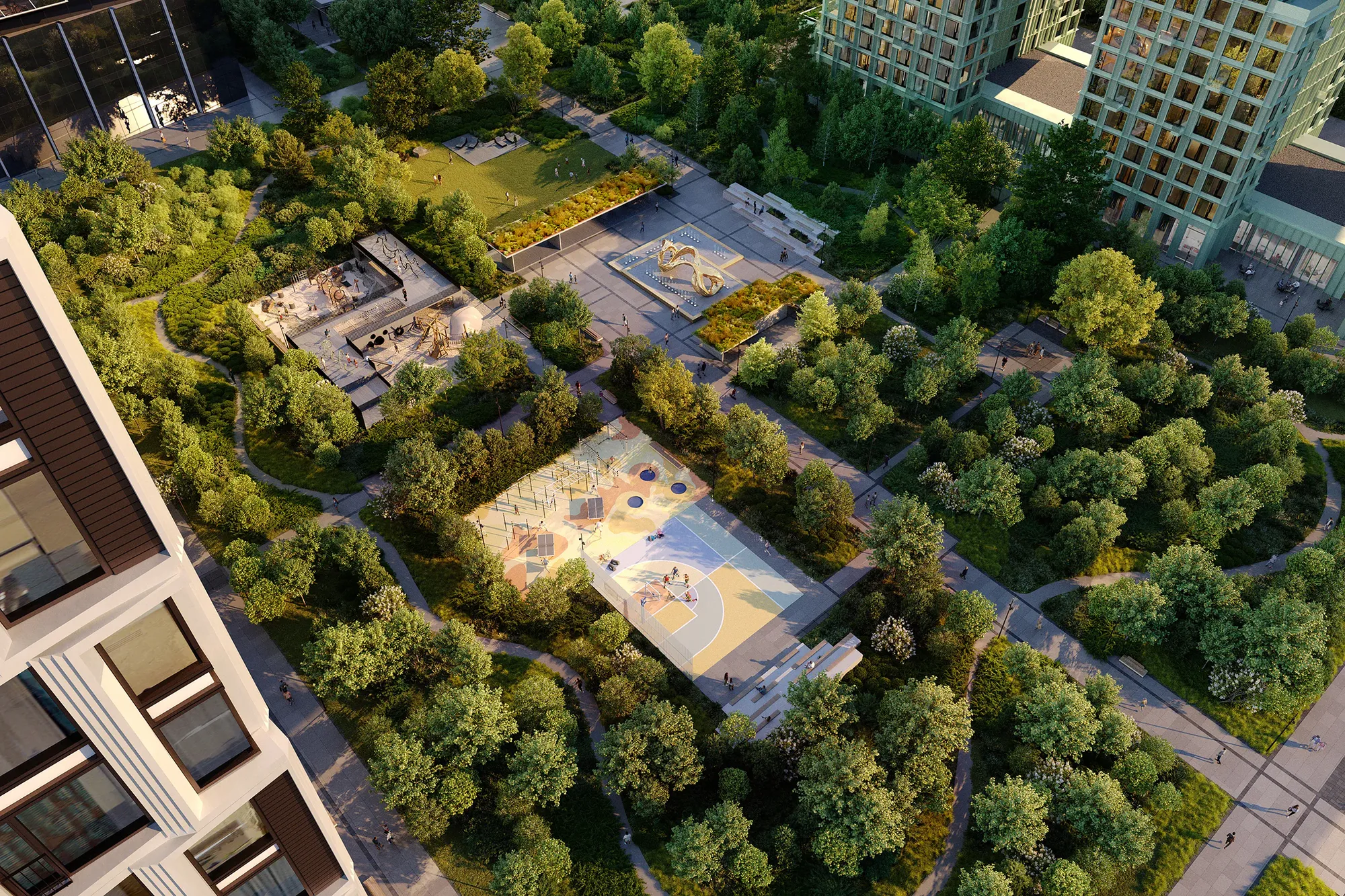
The heart of the district is a cascade park that brings together multifunctional areas. It has a bioswales (vegetated shallows) system for rainwater collection and purification. Thematic groves serve as a venue for tours and an introduction to sustainable development principles.
"My Street 2.0" is a rethinking of the approach to urban settings. This project demonstrates a shift from designing within existing constraints to establishing new landscaping standards — standards that can serve as a foundation for future cities.